Giant BYoungPool™: Understanding RIMAN’s Exclusive Centella Variety
Giant BYoungPool™ is a protected Centella Asiatica cultivar associated with RIMAN. This guide explains what plant variety protection means and how agricultural exclusivity differs from cosmetic patents.

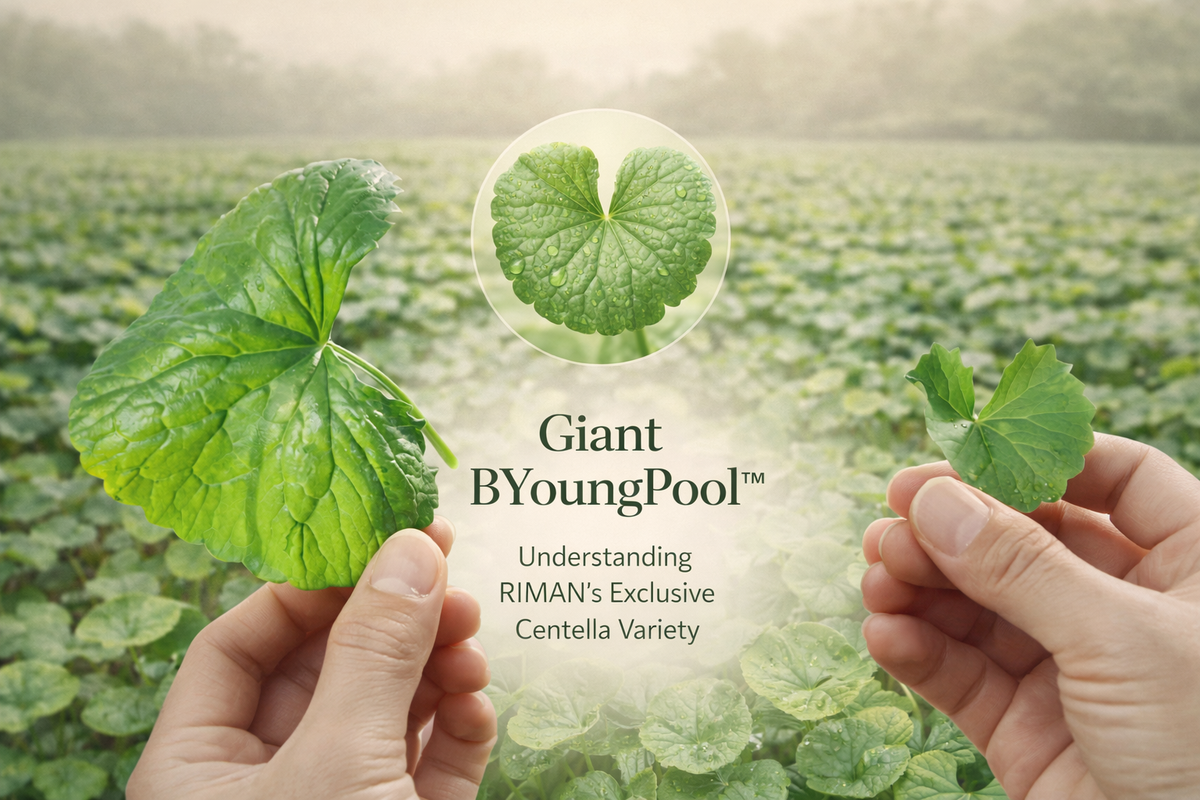
Centella Asiatica is one of the most widely used botanical ingredients in Korean skincare. Known for its soothing and barrier-supporting properties, it appears in countless serums, gels, and creams across global beauty brands.
However, not all Centella is identical.
In discussions surrounding RIMAN products, one term frequently appears: Giant BYoungPool™ — a specifically cultivated variety of Centella Asiatica associated with the brand.
This article explains what Giant BYoungPool™ is, what “Plant Variety Protection” means, and how agricultural exclusivity differs from cosmetic formulation patents.
What Is Giant BYoungPool™?
Giant BYoungPool™ is described as a selectively cultivated cultivar of Centella Asiatica.
Unlike conventionally sourced Centella extracts available on the open ingredient market, this variety is managed under controlled agricultural development.
It is commonly characterized by:
- Larger leaf structure
- Controlled cultivation standards
- Proprietary sourcing management
- Emphasis on ingredient consistency
Botanically, it remains Centella Asiatica.
The distinction lies in its cultivar origin and cultivation control.
What Is Plant Variety Protection (PVP)?
When researching Giant BYoungPool™, you may encounter references to Plant Variety Protection (PVP).
Plant Variety Protection is a legal framework that grants exclusive rights to newly developed plant cultivars. It is not a cosmetic formula patent, nor does it protect product performance claims.
Instead, PVP protects:
- The specific cultivated plant variety
- Commercial reproduction rights
- Agricultural exclusivity for a defined period
This legal structure ensures that the protected cultivar cannot be commercially reproduced without authorization.
It is important to distinguish this from:
- Ingredient patents (which protect chemical discoveries)
- Formula patents (which protect product compositions)
PVP applies at the agricultural level.
Why Ingredient Exclusivity Influences Brand Positioning
In the skincare industry, ingredient differentiation often plays a role in how brands are positioned.
When readers encounter terms such as:
- “exclusive plant cultivar”
- “protected agricultural variety”
- “20-year plant protection”
it may signal that the brand maintains tighter control over sourcing and cultivation.
From an industry perspective, agricultural exclusivity can contribute to:
- Supply chain structure
- Raw material consistency
- Brand-level differentiation
However, ingredient exclusivity alone does not determine performance outcomes. Final product results depend on formulation design, extraction processes, and overall skincare architecture.
Giant BYoungPool™ represents an example of vertical integration at the cultivation level rather than a laboratory-based invention.
How Giant BYoungPool™ Fits into Modern Skincare
Centella Asiatica is commonly used for:
- Skin barrier support
- Redness-calming routines
- Hydration layering
- Sensitive skin maintenance
Proprietary cultivars such as Giant BYoungPool™ reflect a broader trend in skincare — brands developing controlled ingredient sources to differentiate within a competitive marketplace.
For readers researching RIMAN, understanding the agricultural and legal structure behind Giant BYoungPool™ provides context beyond marketing terminology.
Rather than focusing solely on performance claims, it offers insight into how ingredient sourcing strategies influence brand identity.
Frequently Asked Questions
1. Is Giant BYoungPool™ different from regular Centella Asiatica?
Botanically, Giant BYoungPool™ remains Centella Asiatica. The difference lies in its cultivated plant variety and agricultural management rather than its botanical classification.
2. What is Plant Variety Protection (PVP)?
Plant Variety Protection is a legal framework that grants exclusive rights over the commercial cultivation of a specific plant cultivar. It does not function as a cosmetic performance patent.
3. Does plant variety protection guarantee better skincare results?
Plant protection secures cultivation rights. Final skincare performance depends on formulation design, extraction methods, and ingredient synergy.
4. Why do brands develop proprietary plant cultivars?
Brands may pursue proprietary cultivars to maintain sourcing control, ingredient consistency, and long-term supply chain management.
Final Thoughts
Giant BYoungPool™ remains Centella Asiatica at its botanical core.
What differentiates it is cultivar selection, cultivation management, and plant-level legal protection.
As skincare brands increasingly emphasize ingredient transparency, understanding the difference between agricultural exclusivity and cosmetic patents helps consumers evaluate product positioning more clearly.