Why Skincare Can Cause Redness: Causes & Solutions
An educational guide explaining why skincare can cause redness, including barrier disruption, irritation triggers, and general ways to reduce sensitivity.

Introduction
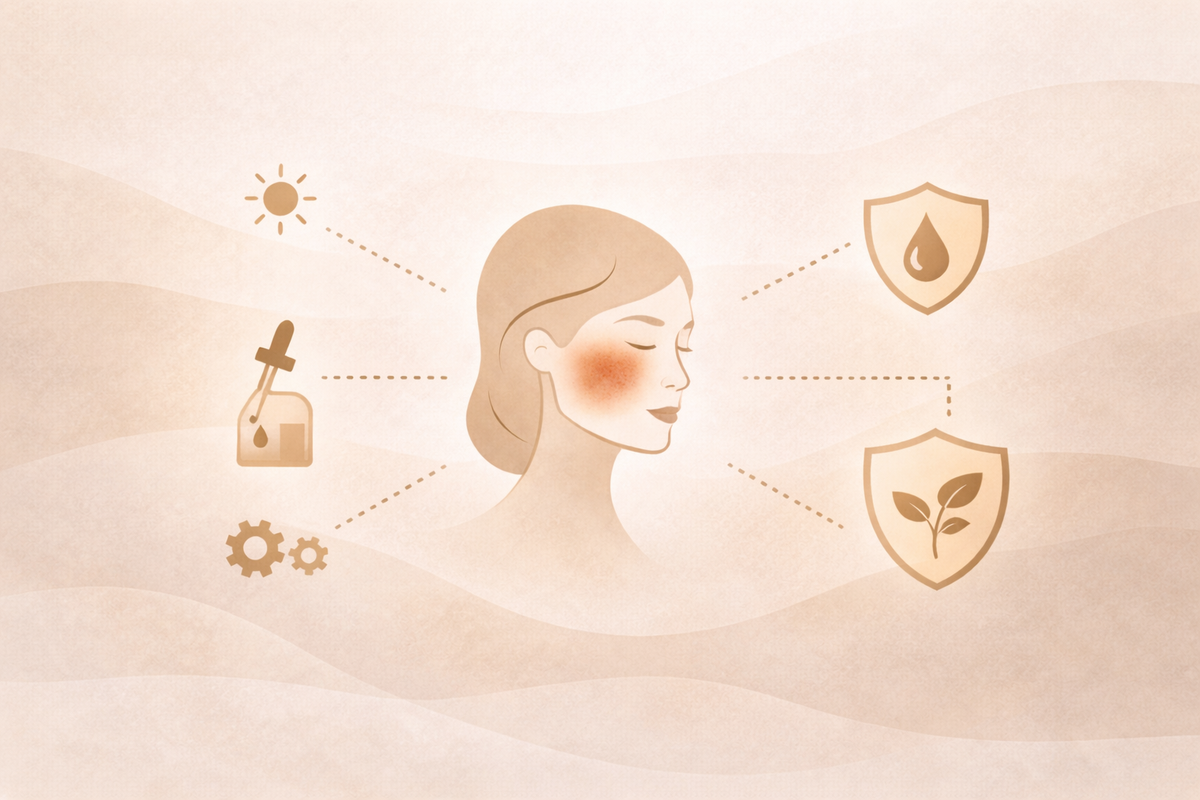
Skin redness after skincare is a common concern and does not always indicate an allergic reaction or a “bad” product. In many cases, redness occurs because the skin barrier has been disrupted or overwhelmed, making the skin more reactive to internal and external triggers.
This article provides an independent, educational overview of why skincare can cause redness, the most common underlying causes, and general approaches to reducing irritation. It is intended for information and reference purposes only and does not replace professional medical advice.
What Is Skin Redness?
Skin redness, often referred to as erythema, is a visible response caused by increased blood flow near the surface of the skin. It can appear temporarily or persist over time, depending on the underlying trigger and skin condition.
Redness may present as:
- Flushing or warmth
- Patchy redness
- Sensitivity or stinging sensations
- Discomfort after applying skincare products
Not all redness is the same, and understanding its cause is essential before attempting to address it.
Common Causes of Redness After Skincare
1. A Weakened Skin Barrier
The skin barrier plays a critical role in protecting against moisture loss and external irritants. When this barrier is compromised, the skin becomes more reactive, allowing irritants to penetrate more easily.
A disrupted barrier may result from:
- Over-cleansing
- Excessive exfoliation
- Frequent product switching
When barrier function is reduced, even normally tolerated products can trigger redness.
2. Overuse of Active Ingredients
Strong or concentrated ingredients are not inherently harmful, but excessive use or improper layering can overwhelm the skin.
Redness may occur when:
- Multiple active ingredients are combined at once
- Products are applied too frequently
- The skin does not have time to recover between treatments
Sensitive or compromised skin is particularly vulnerable to this type of irritation.
3. Environmental and Lifestyle Factors
External conditions can amplify skin reactivity, even when skincare routines remain unchanged.
Common contributing factors include:
- Dry or cold climates
- High humidity or heat
- Stress and lack of sleep
- Sudden changes in routine or environment
In these situations, redness is often the result of cumulative stress rather than a single product.
4. Individual Skin Sensitivity
Skin sensitivity varies widely between individuals. Genetic predisposition, immune response, and existing skin conditions can all influence how the skin reacts to skincare products.
What causes redness for one person may be completely tolerable for another.
How to Reduce Skincare-Related Redness
While this article does not provide medical treatment advice, general skincare practices may help reduce irritation-related redness:
- Simplify routines rather than adding more products
- Introduce new products gradually
- Avoid frequent routine changes
- Allow time for the skin barrier to recover
Consistency and moderation are often more beneficial than aggressive correction.
When Redness May Require Professional Advice
Redness that is persistent, painful, or accompanied by swelling or burning sensations may indicate an underlying condition that requires professional evaluation.
Skincare products are cosmetic in nature and are not intended to diagnose or treat medical skin conditions.
Final Thoughts
Redness after skincare is often a signal that the skin barrier is under stress rather than a sign of immediate harm. Understanding the role of barrier health, routine stability, and individual sensitivity can help users make more informed skincare decisions.
A calm, consistent approach is usually more effective than frequent adjustments when addressing skincare-related redness.