Why More Skincare Isn't Always Better

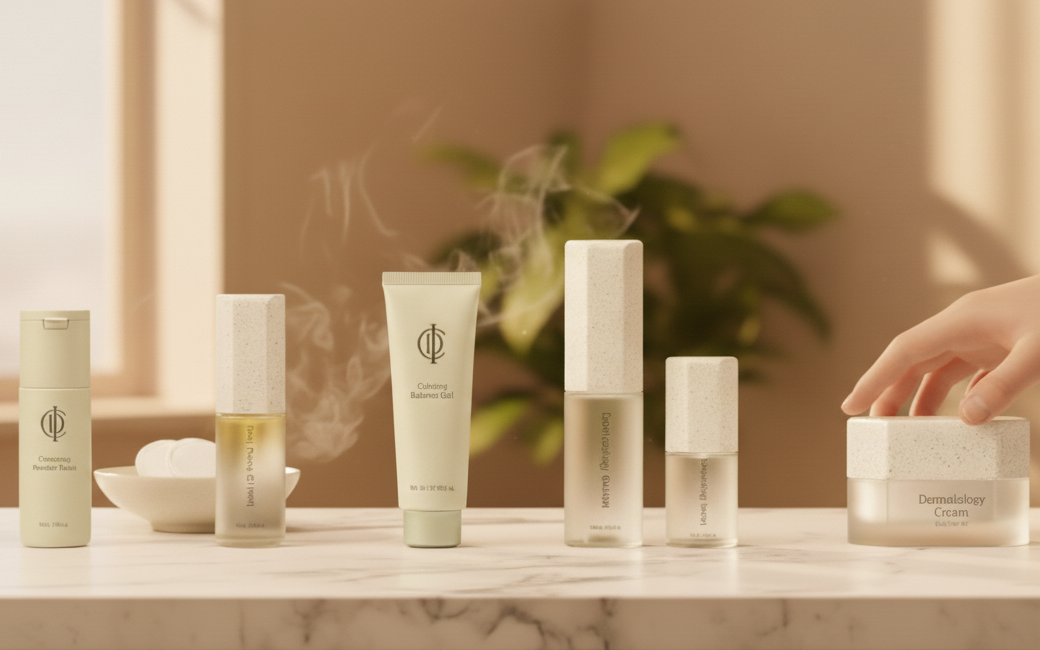
In skincare, adding more products often feels like the safest solution.
When redness, irritation, or breakouts appear, the instinct is to do more — more layers, more actives, more treatments.
However, skin discomfort is frequently the result of over-structuring a routine, not under-performing products.
This article explains why more skincare does not always lead to better skin outcomes, and how simplifying routine design can improve skin stability over time.
This content is for educational purposes only.
Why “Adding More” Feels Logical
When skincare problems arise, users often assume:
- The routine is missing something
- The products are not strong enough
- Results would improve with additional steps
This mindset is understandable. Skincare marketing frequently reinforces the idea that solutions are additive — that progress comes from layering more.
But skin biology does not always respond positively to accumulation.
How Over-Complex Routines Stress the Skin
The skin barrier functions best under stable, predictable conditions.
Overly complex routines may:
- Introduce too many active ingredients at once
- Overlap similar functions unnecessarily
- Increase friction and manipulation of the skin
- Reduce the skin’s ability to adapt and recover
Instead of improving results, excessive layering can lead to:
- Redness
- Sensitivity
- Stinging or burning
- Inconsistent skin reactions
In many cases, these responses are signs of barrier fatigue, not product failure.
More Steps ≠ Better Structure
The issue is rarely the number of steps alone, but whether each step serves a clear purpose.
A well-designed routine focuses on:
- Function, not quantity
- Sequence, not intensity
- Consistency, not novelty
When steps overlap in function or compete for absorption, the skin receives mixed signals — leading to instability rather than improvement.
Why Simplified Routines Often Perform Better
Simplification does not mean neglect.
It means:
- Removing redundant steps
- Allowing the skin time to respond
- Creating space for recovery
Simplified routines make it easier to:
- Identify what the skin actually needs
- Maintain consistency over time
- Reduce barrier stress
Many people experience improved comfort and fewer reactions after reducing, rather than expanding, their routine.
Structure Over Volume
Structured routines prioritise clarity:
- Each step has a role
- Each layer builds logically on the previous one
- The skin is not overwhelmed
This approach is reflected in many barrier-focused skincare philosophies, where routines are organised around cleansing, hydration, and protection — rather than endless product accumulation.
Many of these issues are not caused by individual products, but by how routines are structured as a whole.
A deeper explanation of how layered routines support skin balance can be found in our main guide on barrier-friendly skincare routines.
Final Thoughts
When skincare feels unpredictable or irritating, the solution is not always to add more.
Often, progress comes from:
- Simplifying
- Slowing down
- Rebuilding routine structure
Skin thrives on consistency, not excess.
Understanding why each step exists matters more than how many steps are included.
📌 Editorial Note
This article is part of rimanworld’s independent educational content and does not promote or sell skincare products.